Water Hardness
The presence of Calcium and magnesium cause hardness in water


INDUSTRY
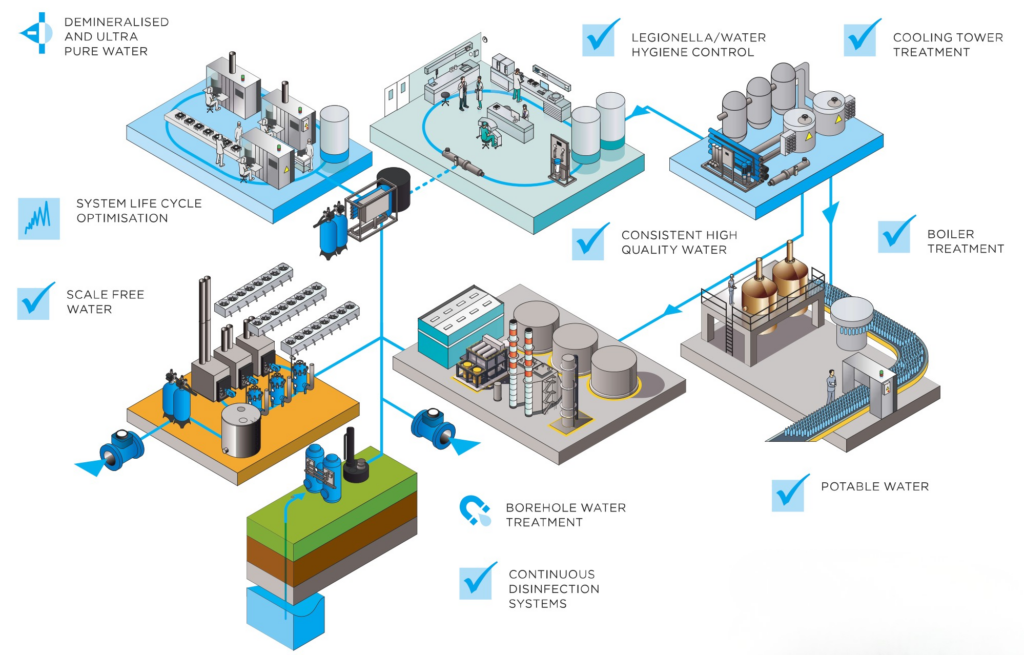
Clean and purified water is crucial to many processes and products across a diverse range of industries. Lubron provides treated water solutions to all sectors of industry including manufacturing, power generation, electronics, chemical and glass.
You know your business best. Once we talk to you, we will quickly determine what water treatment and purification technology is appropriate for your needs. The emphasis will always be on bespoke solutions because no two applications are ever exactly the same. Additionally, we focus on efficiency. We want to make sure that your investment in Lubron is the right solution for your needs, and so adds value to your business.
Iron removal from groundwater and borehole supplies calls for a knowledge of both the chemical reactions involved and how to engineer systems to ensure thee can work effectively. Unaerated groundwater usually contains dissolved iron salts. Introducing oxygen or air to water causes the iron to oxidise and precipitate. Under correct conditions it can be filtered and removed from the water.
Calcium as well as other components, such as salts and dissolved and undissolved metals can leave marks and stains on a number of surfaces, and cause long term damage to pipes and machinery. In such cases, using soft water leads to extended equipment lifespan as well as sustainable cleaning process requirements i.e. less cleaning products and less time.
For consistent high water quality. Lubron delivers solutions, which significantly improve the taste of potable water and eliminate any unpleasant odours.
Water plays a critical part in industry, providing various cooling and heating tasks. This presents a number of control issues which impact on crucial plant operations. Bacteria, scale and corrosion are commonplace in water systems, leading to high energy costs as a result of reduced conductivity. In the worst case scenario, this can cause complete failure of cooling and heating equipment, and potentially, loss of production. To improve efficiency and safety and guarantee a longer system life span, the composition of the water in use should be strictly controlled.
If you need help or advice with any water treatment requirement, contact our team and we’ll get back to you with a tailored, compliant recommendation.